This article is part of Boca Post’s ongoing coverage of the Downtown Campus Redevelopment Project, a proposed public-private partnership involving City-owned land near NW 2nd Avenue and Palmetto Park Road. Read the full project guide, timeline and key documents here.
BOCA RATON, FL — Boca Raton’s long-running debate over the future of its downtown government campus is entering the decision window.
On Tuesday, the Boca Raton City Council is scheduled to vote on the Master Partnership Agreement, the core document that sets the rules for how the downtown civic campus would be redeveloped under a long-term public-private framework tied to Ordinance No. 5769. The vote comes with the March 10 citywide referendum already on the calendar, where residents will decide whether the deal structure can take effect at all.
This is not a standalone construction contract. It is a transaction built in layers. As first reported by Boca Post, The Master Partnership Agreement handles planning, pre-development work, entitlement, and a phased schedule. Separate ground lease documents govern construction, financing, and long-term occupancy once the project reaches lease commencement requirements for a given phase. In practical terms, the City keeps possession and control during pre-development, then the lease framework takes over when the project is ready to move into construction and occupancy.
A key point for voters: the deal documents themselves spell out that they do not become effective unless voters approve them. The Master Partnership Agreement includes a referendum contingency clause that conditions the effectiveness of the agreement on approval by a majority of voters on March 10. If voters reject the measure, the agreement and related documents are void and neither side has ongoing obligations under it, with limited exceptions for provisions that survive termination.
That makes Tuesday’s vote an important procedural step, but not the final trigger. The binding “on/off” switch, as written, is the March 10 referendum.
The financial structure remains a central focus. The ground lease terms provide for base rent that is defined as the greater of two calculations: a “percentage rent” and a “minimum annual guarantee.” The minimum annual guarantee is formula-driven and tied to baseline fair market value allocations across project components, including a distinct calculation for the hotel component versus other components. The rent structure also includes a participation rent concept: once rent commencement begins, participation rent is calculated annually as a percentage of the amount by which gross revenues exceed defined gross revenue hurdles for each component.
The documents make clear that the participation rent people tend to talk about as the “upside” is not automatic and is not pooled. It is calculated separately by project component. The exhibit example provided in the lease materials shows how one component can exceed the hurdle and pay participation rent in a given year while another component does not exceed its hurdle and pays no participation rent at all.
Oversight is addressed, but it is built around accounting and ongoing compliance rather than a one-time approval. Under the lease terms, the tenant is required to keep and preserve books and records for at least five years that support calculations of additional rent and participation rent, with certifications required by tenant leadership, and the City has inspection rights on commercially reasonable notice. The documents also treat certain financial records as trade secret material and describe how public records requests would be handled in that context.
The Master Partnership Agreement also contains a dedicated financial reporting section requiring annual financial statements prepared under GAAP, and a set of compiled financial statements issued by an independent certified public accountant on a set timeline after each fiscal year. That reporting is designed to support ongoing verification, including property tax assessment support with the Palm Beach County Property Appraiser’s Office.
The political reality is that the transaction is designed to last beyond election cycles. Even though the Master Partnership Agreement itself has its own term and phase structure, the ground lease framework is the long-range engine. Once a phase reaches lease commencement and the applicable lease takes effect, that lease governs long-term rights and obligations for that phase.
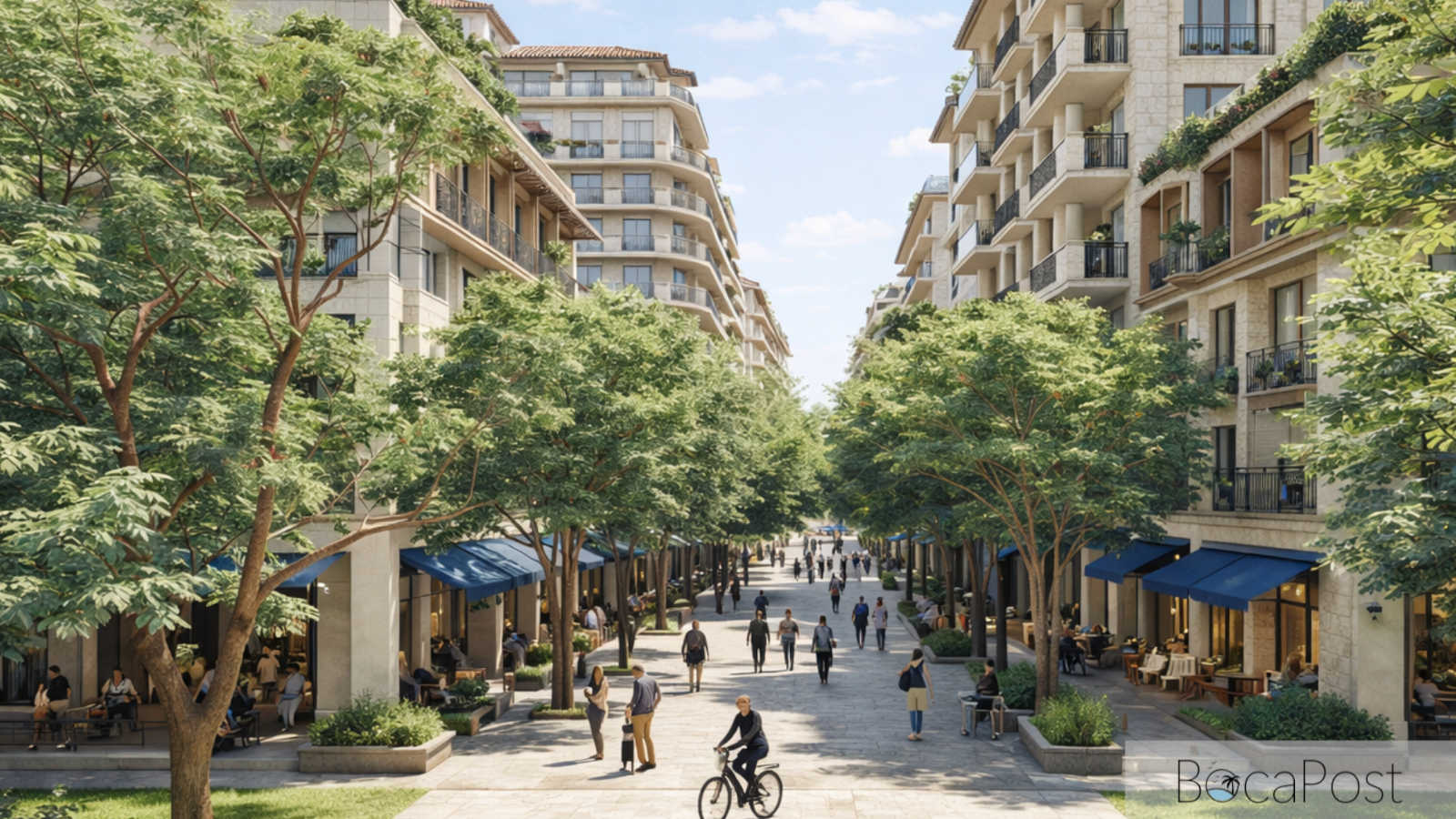
One Boca also distributed an update this week highlighting its public-facing messaging around the project, including that Memorial Park remains City-owned, that usable public recreation would expand, and that the plan includes new civic facilities such as a City Hall, Community Center, and Police Substation. The One Boca update also repeats long-horizon revenue claims tied to rent and tax revenue projections over the life of the development and references the City’s third-party financial review.
A representative from One Boca shared recent conceptual images from the project:
For residents trying to track what actually matters between now and March 10, the next steps are straightforward.
Tuesday’s vote is where Council members decide whether to approve the Master Partnership Agreement as written and move the deal package forward in a final, executable form. March 10 is where voters decide whether the agreements become effective at all.
Boca Post will continue reviewing the exhibits and deal mechanics as the referendum approaches, including what is fixed, what is adjustable through the approval process, and what obligations can be enforced years from now.
From breaking incidents to city decisions, Boca Post is your daily source for Boca Raton News that actually impacts life here.
Debates over One Boca, Memorial Park, and downtown redevelopment now land squarely on the ballot. Boca Raton’s March 10 election includes two referendum questions tied to city land, public safety facilities, and long-term planning — along with contested races for mayor and council.