
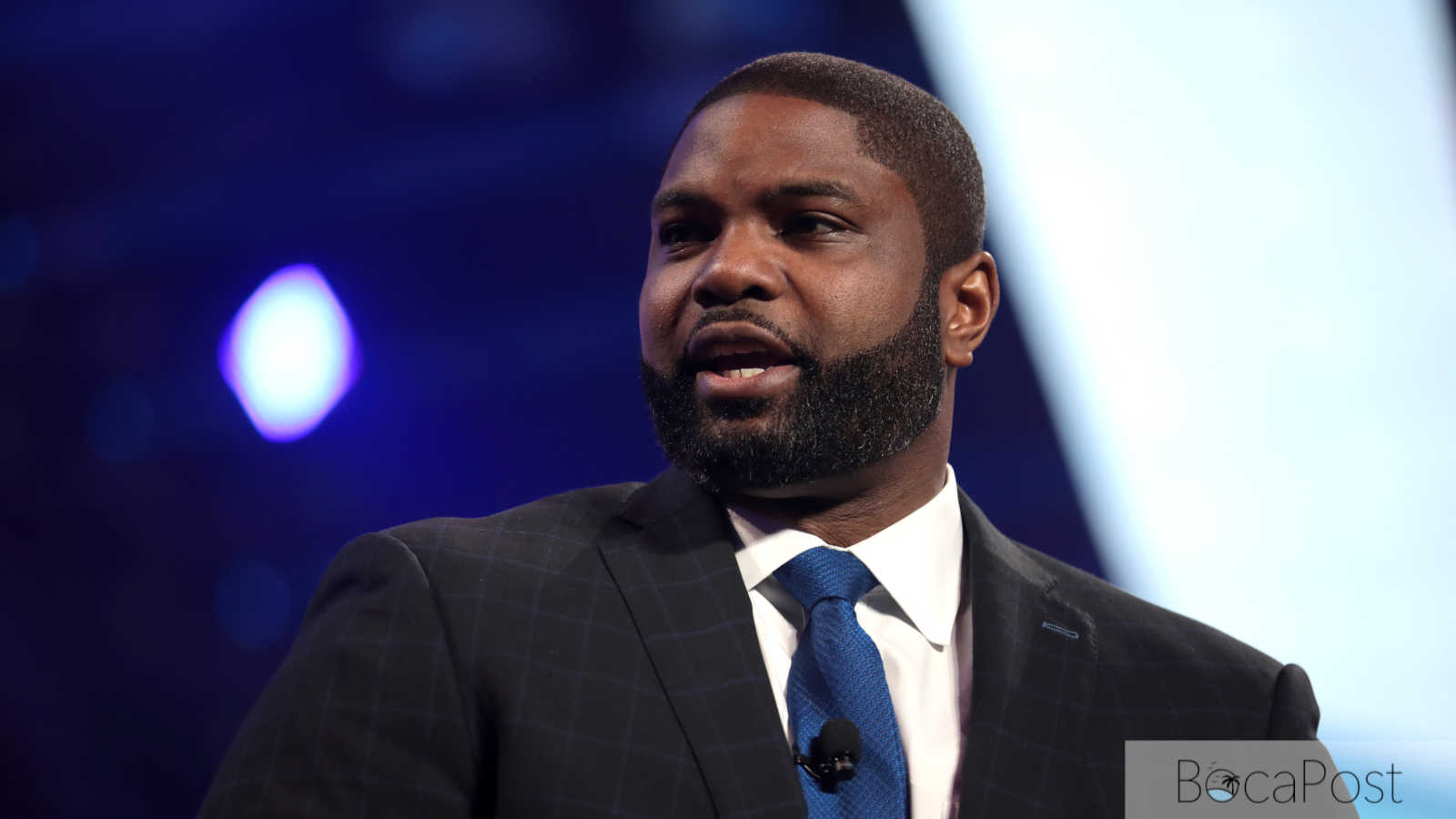

FLORIDA (Boca Post) (Copyright © 2026) — A new Florida Republican primary survey memo is signaling a lopsided early landscape in the 2026 governor’s race, with U.S. Rep. Byron Donalds posted as the clear front-runner across multiple ballot tests — and a major lift among voters who know President Donald Trump has endorsed him.
The memo, dated Jan. 8, 2026, is from Fabrizio, Lee & Associates and authored by David Lee, Tony Fabrizio and Travis Tunis. It summarizes a statewide poll of likely Florida Republican primary voters and argues that Trump’s endorsement “seals the deal” for Donalds.
For Palm Beach County readers, the polling memo matters less as a prediction and more as a snapshot of where Republican voters say they are right now. The governor’s race drives turnout, donor attention, messaging priorities and local organizing in places like West Palm Beach and across the county’s GOP network. It also shapes what South Florida voters hear in the months ahead — from TV ads to mailers to candidate visits.
In the memo’s four-way ballot test that included Donalds and Florida First Lady Casey DeSantis, Donalds led 39% to 26%, with 31% undecided. The memo also breaks out a subgroup of Republican primary voters who were aware of Trump’s endorsement of Donalds; within that group, Donalds led 68% to 10%, with 15% undecided.
Another four-way test paired Donalds against Jay Collins, along with James Fishback and Paul Renner. In that version, Donalds led 45%, Collins was at 6%, Fishback at 4% and Renner at 3%, with 41% undecided. Among voters aware of Trump’s endorsement, Donalds measured at 73% compared with 5% for Collins, 6% for Fishback and 1% for Renner.
A three-way ballot test also showed Donalds with a wide lead. In that matchup, Donalds was at 47%, Fishback at 5% and Renner at 4%, with 43% undecided. Among voters aware of Trump’s endorsement, the memo reports Donalds at 76%, Fishback at 6% and Renner at 1%, with 17% undecided.
The memo includes an “informed ballot” approach that explicitly tells respondents about endorsements, then measures movement. In a test where voters were told Trump endorses Donalds and Gov. Ron DeSantis endorses Casey DeSantis, Donalds’ support moved from 39% to 48%, while Casey DeSantis moved from 26% to 21%. Undecided dropped from 31% to 25%, with smaller shifts for Fishback and Renner.
A similar informed endorsement test against Collins showed Donalds rising from 45% to 58%, with Collins moving from 6% to 4% and undecided falling from 41% to 30%. The memo also includes an informed three-way ballot where Donalds moved from 47% to 61%, with undecided falling from 43% to 31%.
The authors also address Collins’ paid media, writing that any “sugar high” from a multimillion-dollar ad buy has “completely dissipated,” and claiming only 16% of Republican primary voters recalled seeing anything about Collins. The memo’s tone is direct: it presents Donalds as the “clear choice” to unify Republicans and “keep Florida red.”
Methodologically, the memo states Fabrizio, Lee & Associates conducted a statewide survey of 600 likely Florida Republican primary voters from Jan. 4–6, 2026, with interviews split between live-operator cell phone, live-operator landline, and SMS-to-web. The memo reports a margin of sampling error of ±4.0% at the 95% confidence interval.
The demographic and media-market breakdowns included in the memo show the sample distributed across Florida DMAs, including West Palm Beach–Ft. Pierce at 9% and Miami–Ft. Lauderdale at 10%. Those numbers are relevant for Boca Raton-area readers because they indicate South Florida voters were represented in the sample the memo is using to support its conclusions.
As with any early-cycle polling, the memo is one data point — but it is a detailed one, with multiple ballot tests, subgroup comparisons, and endorsement experiments showing large gaps in Donalds’ favor within the surveyed Republican primary electorate.
Source: Fabrizio, Lee & Associates polling memo dated Jan. 8, 2026.





0 Comments