

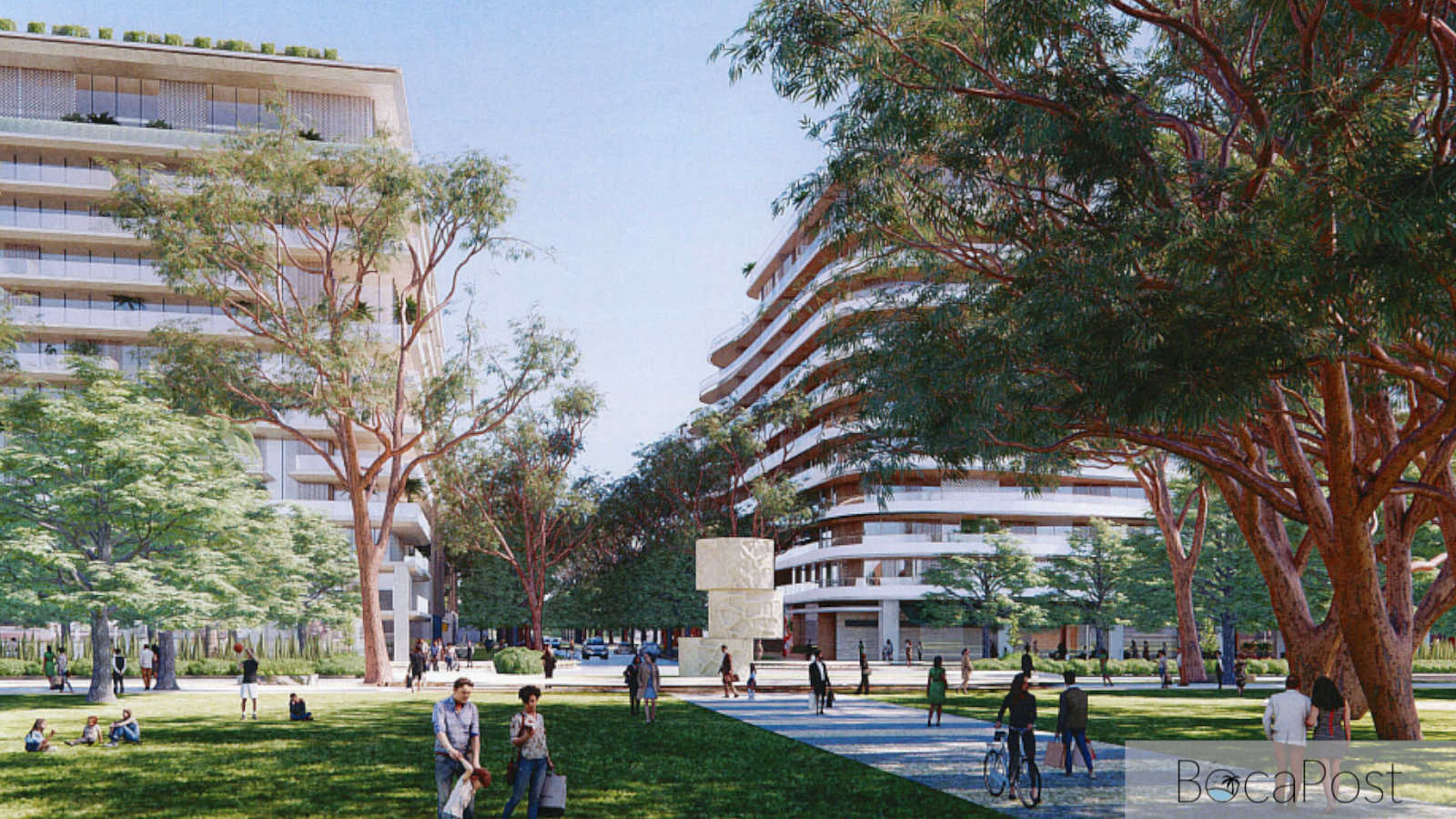
This development is connected to the broader Downtown Campus Redevelopment Project, the City’s long-term plan to modernize its downtown government campus. For background on the proposal, the agreements approved by Council, and the referendum details, see the full project page.
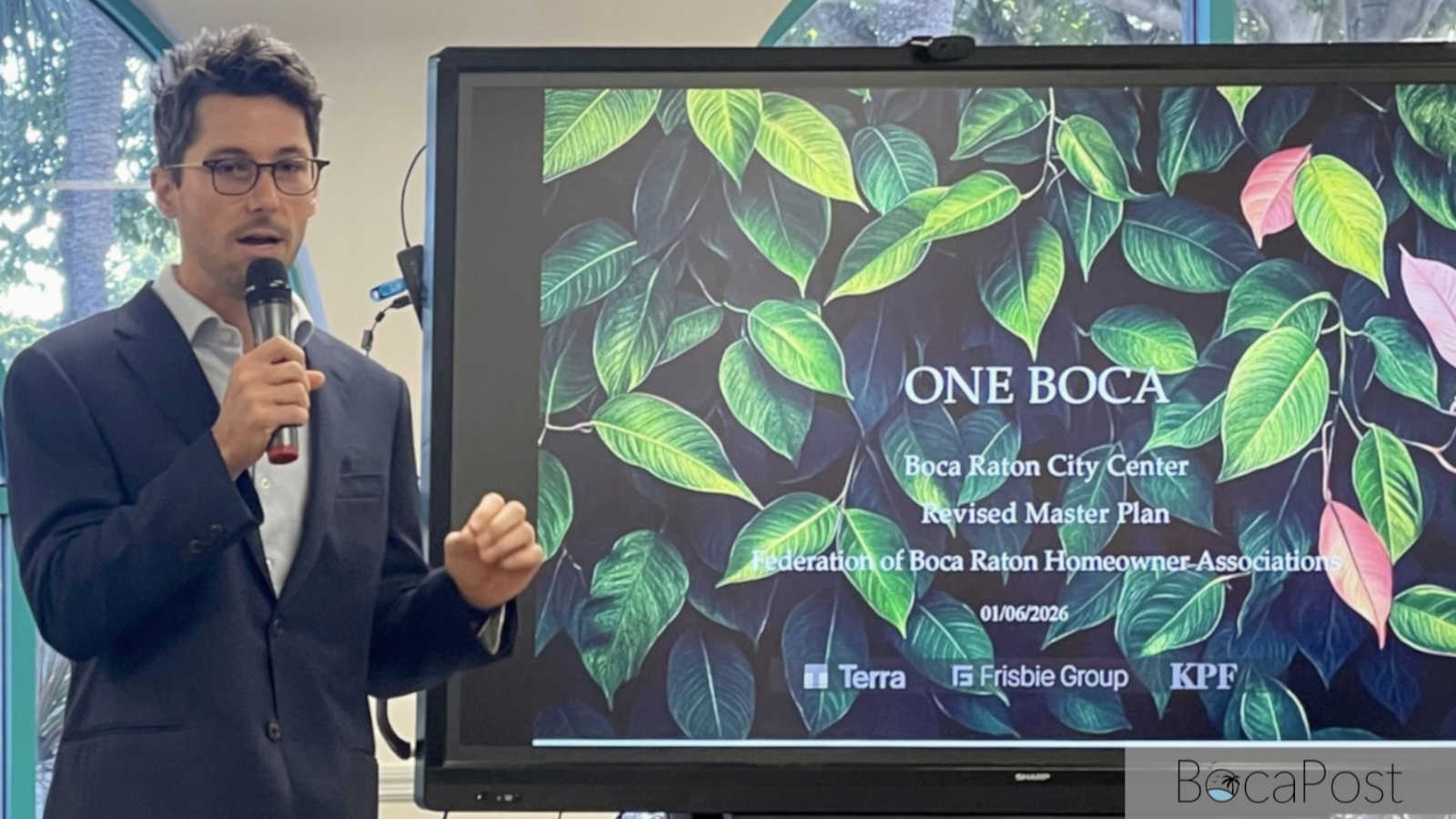
BOCA RATON, FL (Boca Post) (Copyright © 2026) — Rob Frisbie Jr. walked into a tough room Tuesday morning.
More than 50 people packed the City of Boca Raton’s community center for a Federation of Boca Raton Homeowner Associations meeting, and the topic was One Boca’s proposed master plan for the city’s downtown government campus — the roughly 30-acre area around City Hall that has become one of the most fought-over ideas in local politics.
Federation chairman Brian Stenberg framed the session as a public Q&A, not a rally. The group isn’t endorsing “one plan or the other,” he told the crowd, saying the goal was to give residents “an opportunity to see what is best for the community.” Still, the skepticism in the room was obvious, and Frisbie said he expected it.
“Asking tough questions is healthy,” he told the audience after walking through the plan with slides, laying out “how we got here and where we are today.”
Frisbie said the proposal has changed significantly after feedback from residents and veterans groups, calling the current version “dramatically different” than earlier iterations. He highlighted a reduced private development footprint, a promise that park land would not be sold, leased, or developed, and a redesigned plan centered on connectivity between downtown and the Brightline station.
At multiple points, he tried to make clear where the city’s authority sits in the process. “An important clarification is the city has no obligation to build what we proposed,” he said, adding that “at any point the city can say to us ‘you’re out.’”
The plan is expected to go before voters on the March 10 Municipal Election ballot, with a referendum tied to the final version. Before that, the Boca Raton City Council is scheduled to consider approval of the master partnership agreement and lease on Jan. 20 — the documents that would govern how the redevelopment moves forward if voters approve it.
Frisbie also told the crowd he’s in it for the long haul if the project clears those hurdles. “If we get the ability to do this, I will be behind this project for years to come,” he said, drawing applause.
Most of the questions centered on everyday impacts — traffic flow, parking, and how people would actually move through a denser downtown footprint.
“You can choose to park on the street or garages,” Frisbie said, describing about 2,000 parking spots overall, including one dedicated parking garage and additional spaces in buildings.
He pitched the redevelopment as an opportunity to rethink a section of downtown south of the Brightline station that he described as underused and dominated by surface parking lots and aging civic buildings. In excerpts shared from his remarks, he called it an area “most Boca residents rarely visit,” while noting the city’s previous investment in Brightline and the current reality that it is “surrounded by asphalt.”
Frisbie also leaned into the parks-and-public-space pitch, particularly around Memorial Park and new recreation features. He said Memorial Park would remain city-owned, preserved, and enhanced, and that veteran memorial planning is being done in collaboration with Boca Raton’s veteran community. He also described a pedestrian-only promenade intended to link Palmetto Park Road to the Brightline station, designed as a “people-first” public space.
The money questions came next, including the proposed 99-year lease structure and what happens if costs change over time.
Frisbie suggested the project timeline could be extended if needed, and said the city’s downtown district could cover additional funds if there is a temporary shortfall. He also cited an independent third-party analysis, commissioned by the city, that he said concluded the net present value of the ground lease exceeds the current appraised land value and projects more than $4 billion in direct revenue to the city over the life of the lease.
He argued that “doing nothing does not avoid costs,” saying it shifts costs to taxpayers.
The meeting also doubled as a political gathering point as the March election approaches. Frisbie welcomed input from Save Boca founder and candidate Jon Pearlman and candidate Mike Liebelson. Stenberg said the Federation plans to host a Save Boca speaker at its Feb. 3 meeting. Other city council candidates in attendance included Bob Weinroth, Michelle Grau and Christen Ritchey.
Frisbie closed by pushing participation over slogans — review the facts, ask questions, show up. The next few weeks will decide whether the plan moves forward to voters, and whether Boca’s downtown civic campus becomes the centerpiece of a redevelopment campaign or another plan that stalls out under resident pressure.
0 Comments