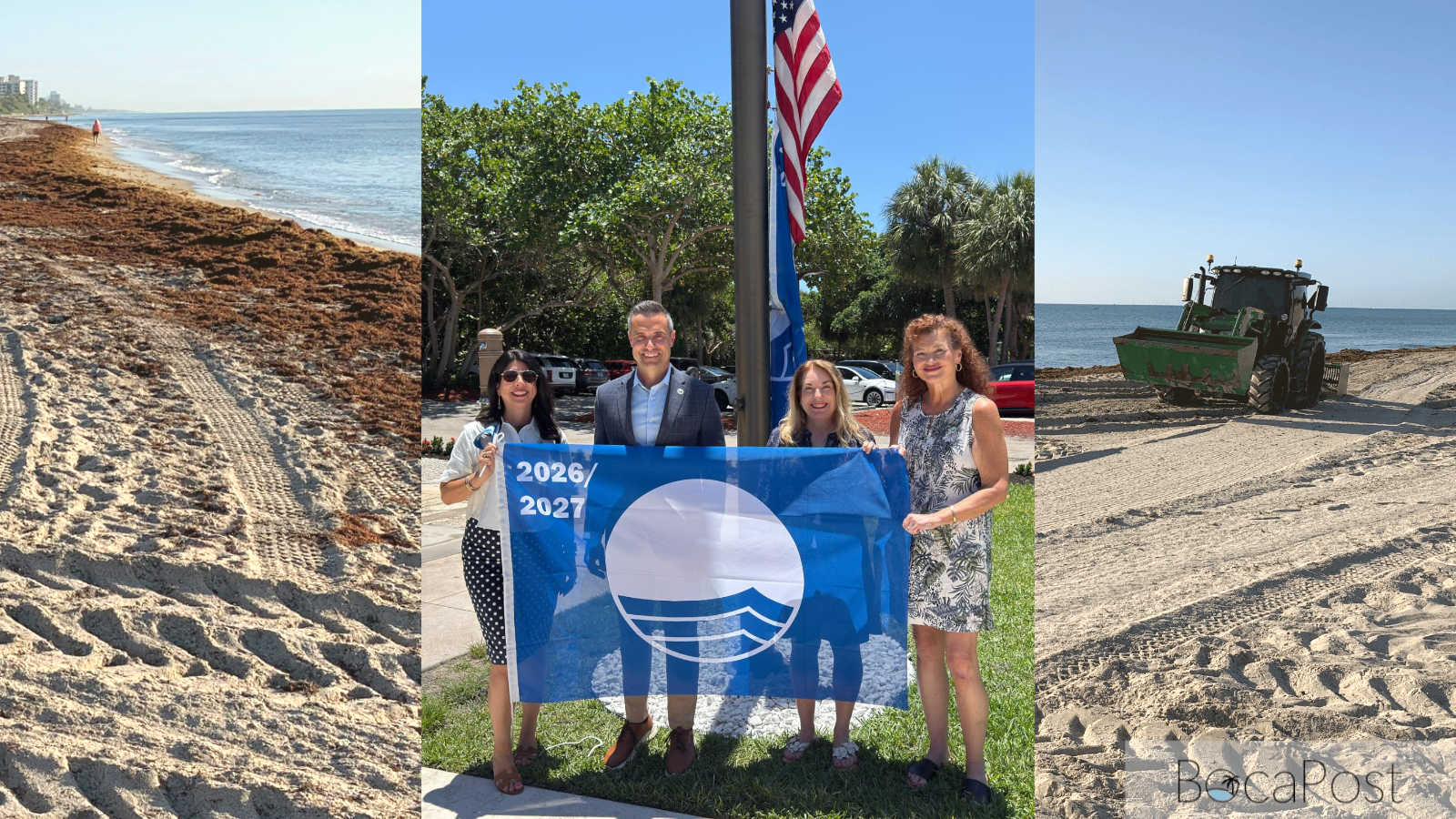
BOCA RATON, FL — Boca Raton’s beach at Spanish River Park has earned its second consecutive international Blue Flag Beach designation, a recognition Mayor Andy Thomson said places Boca among just three beaches in the United States to receive the honor.
Thomson announced the designation in a Facebook post, saying the Blue Flag recognizes water quality, environmental stewardship, safety and sustainability.
For Boca Raton, the designation lands at the intersection of two familiar beach conversations: pride in the city’s coastline and ongoing frustration over sargassum seaweed that can wash onto local beaches during parts of the year.
“The Blue Flag recognizes excellence in water quality, environmental stewardship, safety, and sustainability,” Thomson wrote. “In other words: clean water, beautiful beaches, and a community committed to protecting them for future generations.”
The mayor credited city employees, lifeguards, environmental teams and residents for the designation, saying their work helps keep Boca Raton’s coastline “world-class.”
In the comments on Thomson’s post, several residents praised the recognition and the city’s beaches. Others raised concerns about seaweed. One commenter referenced television coverage of “BEACH SHOCK SEAWEED,” while another wrote, “So now clean up the Seaweed on The Beaches.” Thomson responded to other comments by again crediting city staff, including writing that “truly it’s the work by our incredible City staff that earns a recognition like this.”
Contrary to the “seaweed shock” articles, AI parody images, and social media rants, sargassum is not new to Boca Raton — or South Florida. Native South Floridians know the routine. It comes in. It piles up. It smells. Then it goes.
According to information provided about the city’s beach operations, sargassum is a naturally occurring seaweed that floats on the ocean’s surface and provides habitat for marine species. It also plays a role in shoreline stability. But in populated beach areas, excessive sargassum can create problems for residents, visitors and maintenance crews.
The City of Boca Raton says maintaining its beaches remains a priority for the Recreation Services Department, both for marine life and for residents and beachgoers.
The city’s daily beach-cleaning process does not begin immediately at sunrise with heavy equipment. First, personnel from Gumbo Limbo Nature Center search city beaches for new sea turtle nests from the night before and for hatchlings that may have emerged overnight but not fully made it to the ocean.
Parks maintenance crews cannot begin cleaning until Gumbo Limbo staff give approval to proceed.
Once that search is complete, groundskeeper crews use utility vehicles to clear large debris and trash from the seaweed. A tractor with a large rake mechanism then makes passes along the beach and buries the seaweed as it moves through the area.
The beach is cleaned daily, according to the city information provided, though crews can be limited by equipment failures or large amounts of seaweed deposited during tide changes or high winds. Cleaning is also limited to the last high tide line. Tractors are not allowed to clean the upper beach or dune line.
The city says sargassum season runs from March through October. Accumulations often happen during high tide, which occurs twice a day. Crews generally clean early in the morning, before most beachgoers arrive, but a second tide later in the day can bring another wave of sargassum to shore depending on wind conditions.
The Florida Department of Health has said sargassum itself is not harmful to the skin, according to the information provided, but small sea creatures living in it can cause rashes and blisters. As sargassum decomposes, it can release hydrogen sulfide, which smells like rotten eggs and may irritate the eyes, nose and throat. People with asthma or other breathing conditions may be more sensitive.
The Department of Health advises beachgoers to avoid touching or swimming near seaweed, use gloves if they must handle it, supervise children at the beach and avoid or limit beach time if asthma or respiratory problems are triggered by conditions near decomposing sargassum.
The city information also notes that water quality can be affected by decomposing sargassum. The Florida Department of Health monitors bacteria levels at county beaches through its Healthy Beaches program.
For Boca Raton, the Blue Flag designation is a public recognition of beach management standards. The seaweed complaints show the day-to-day reality of managing a natural coastline during sargassum season.
Spanish River Park remains one of Boca Raton’s best-known public beach areas. Thomson called it “one of the jewels of our City” in a reply to a resident who described it as one of her favorite beaches.
No additional details were provided in Thomson’s post about the other two U.S. beaches receiving the designation or the specific evaluation timeline.
Get Boca Raton news and weather updates — local reporting, daily forecasts, and breaking coverage across the area.