
BOCA RATON, FL (Boca Post) (Copyright © 2026) — A rare tie vote at Boca Raton City Hall has stalled an effort to remove a long-running development designation from much of the Boca Raton Innovation Center campus off Yamato Road, leaving both city lawyers and the property owner in uncertain territory.
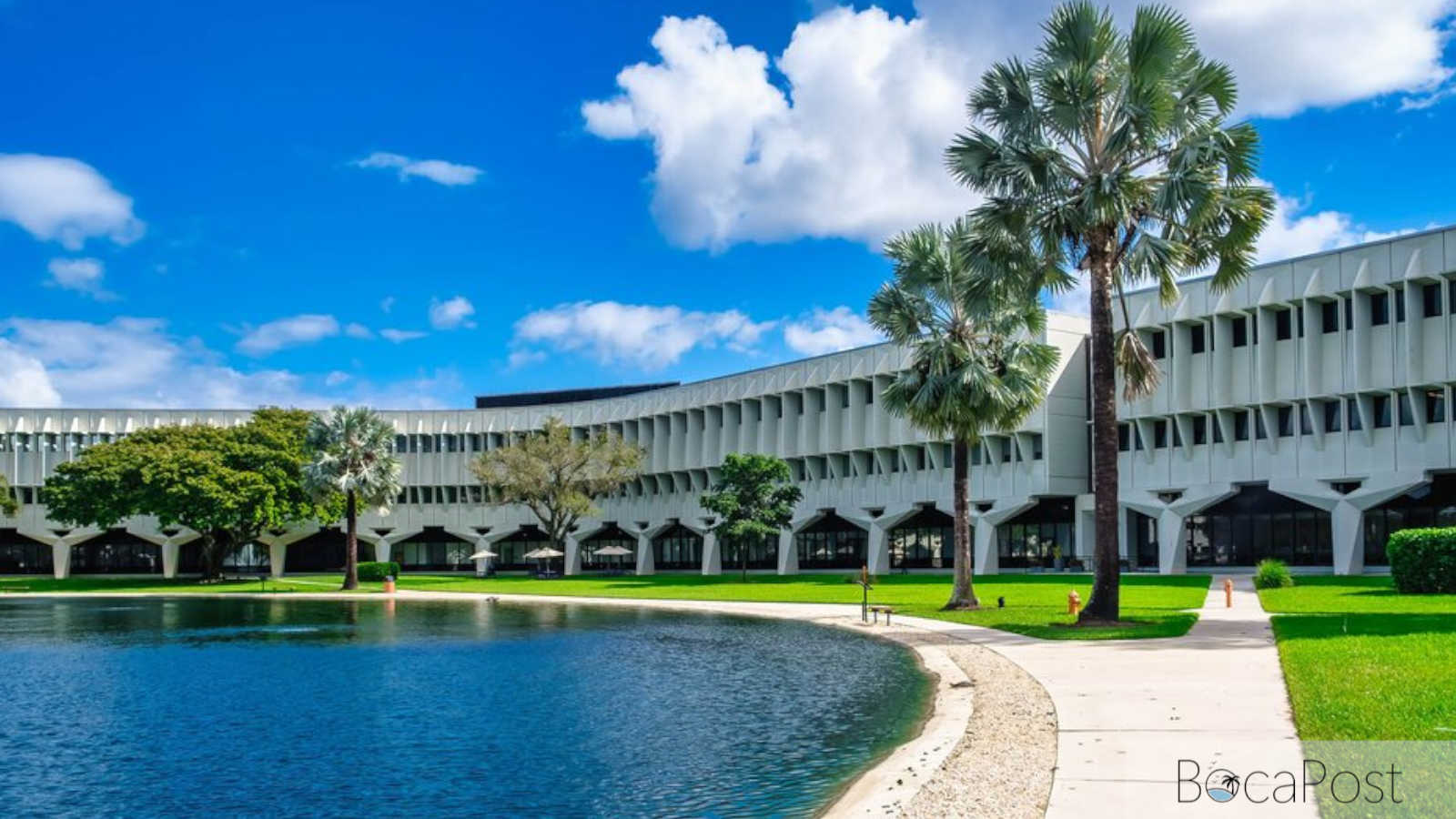
The issue before the Boca Raton City Council this week centered on whether most of the BRIC property, the former IBM campus, should be taken out of a Development of Regional Impact, or DRI. That designation comes from a Florida growth-management framework created in the 1970s for projects expected to affect more than one local jurisdiction. In practice, a DRI added another layer of review by counties, state agencies, and regional bodies for major development.
In this case, city legal staff and the applicant both argued that the designation no longer carries much real force in Boca Raton because the city has since been exempted from DRI regulations after being designated a Dense Urban Land Area by the Florida Legislature. Even so, the designation still remains attached to portions of the property.
BRIC’s owners asked the city to reduce the DRI-covered area from 217.5 acres to 87.89 acres. The requested change would have removed the DRI from the main BRIC portion of the site as well as a generator parcel originally installed by IBM and still in use. A previous change had already removed the area where the Tri-Rail station was built.
The request did not formally include a new development proposal. Still, city staff said approval would have allowed the applicant to pursue future development under the city’s and county’s current traffic concurrency rules rather than through the older DRI structure. If approved, the change also would have required BRIC to submit a transportation demand master plan to the city.
Bonnie Miskel, an attorney representing BRIC, told council members the designation now forces city staff to repeat work that no longer changes the outcome.
“Right now, your staff is required to do the same exercise twice, just to say they did it,” Miskel said. She added that removing the DRI would mean “no outside agency can interfere with the wishes of what our council may have.”
That argument did not persuade the full council.
Councilwoman Michelle Grau said she wanted more clarity about what BRIC intends to do with the property before stripping away the old designation. Councilman Jon Pearlman also voted no, though he did not comment during the discussion.
“We have not been presented with a clear vision or even potential scenarios as to what comes next,” Grau said.
Mayor Andy Thomson and Councilwoman Stacey Sipple voted in favor of the redesignation request. The deciding vote would have fallen to Councilwoman Yvette Drucker, but she had left the meeting early, leaving four members on the dais and creating the possibility of a deadlock. That is exactly what happened.
According to City Attorney Joshua Koehler, tie votes are highly unusual in Boca Raton city proceedings. He said the result created a legal gray area because city rules generally bar the same application from returning for one year after a denial. A tie vote, however, means the motion failed, and whether that failure counts as a legal denial is not entirely clear.
“There is a rule that the council has adopted that a motion to reconsider has to be made, technically, by a party on the prevailing side,” Koehler said, “however in this case, there was no prevailing side.”
That leaves the city and the applicant with a practical question as much as a legal one: whether this specific request is now frozen for a year, or whether BRIC can come back sooner with a broader or revised application.
Koehler suggested there may be a path forward if the applicant returns with something more complete, such as the transportation study or a fuller description of future development plans. In that situation, he said, the DRI issue could be folded into a more comprehensive proposal and considered on that basis.
“It would seem to me that if this council wanted to defer and consider that future application, when it would have more of an idea of what the applicant was proposing to do with the land, it could delay or postpone this matter until it could hear the complete proposal,” Koehler said. “I think that, inherently, seems correct.”
Miskel did not lay out BRIC’s next move during the meeting, but appeared comfortable with Koehler’s explanation.
For residents, the immediate effect is simple: nothing changes yet at BRIC. The legacy DRI boundaries remain in place over the acreage at issue, and no new development plan was approved as part of this vote. What comes next will likely depend on whether BRIC returns with more detail and whether city officials decide that a revised application is materially different enough to be heard again before a year passes.
Koehler said the tie vote was the first of his tenure with the city.
City policy decisions and development projects often intersect with school zoning, funding, and long-term planning. Find comprehensive reporting in our Boca Raton City Government and Development section.