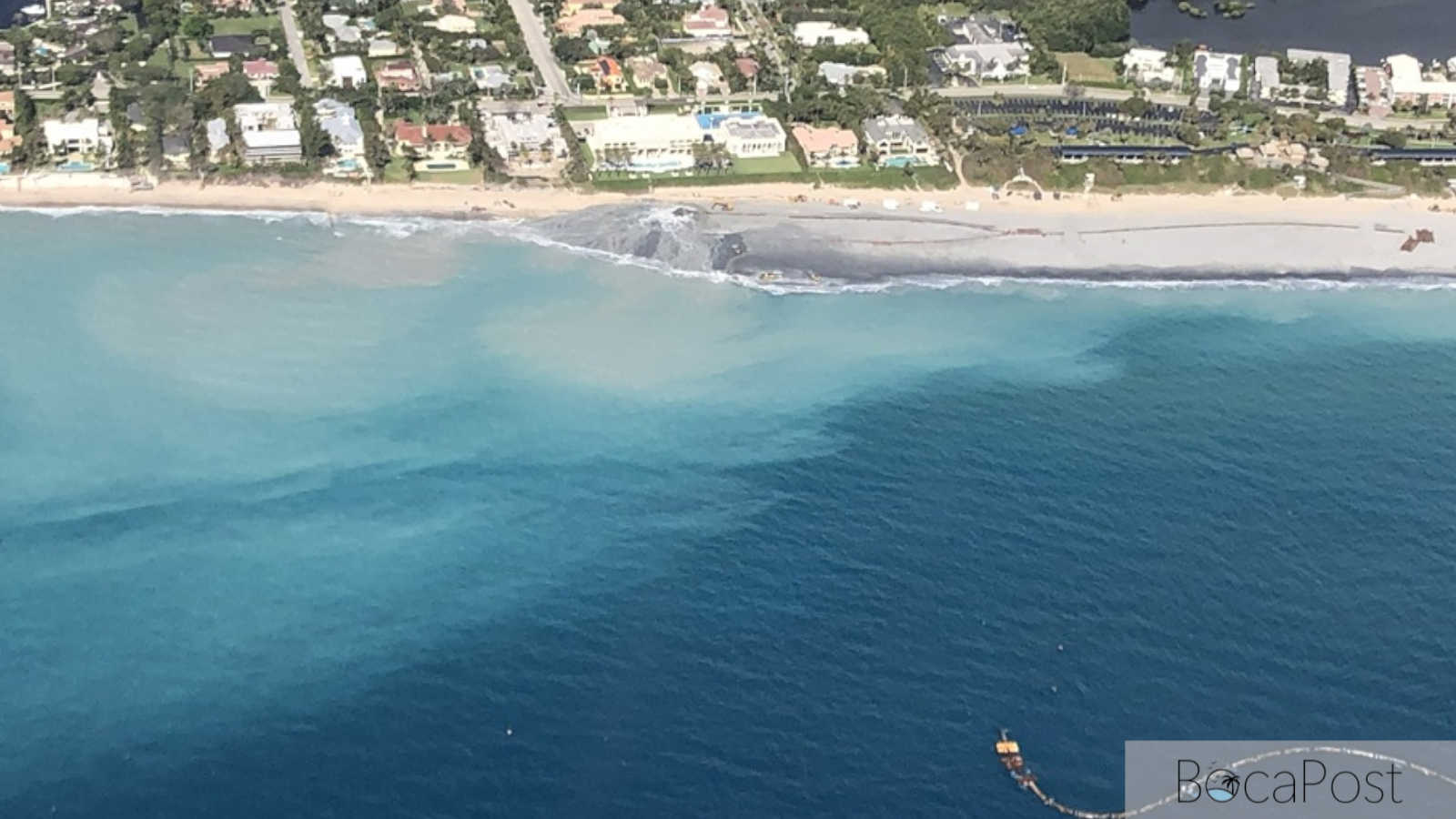

BOCA RATON, FL (Boca Post) (Copyright © 2026) — A new Florida Atlantic University study is putting a sharper focus on a winter pattern familiar along the Palm Beach County coast: thousands of blacktip sharks moving through nearshore waters at the same time beach nourishment projects are adding sand to eroding shorelines.
The research centers on northern Palm Beach County, where beach nourishment is carried out nearly every year to widen beaches, protect infrastructure, and maintain recreational shoreline. But the same work can also stir up prolonged turbidity, leaving large stretches of nearshore water cloudy or murky during a period when blacktip sharks are packed close to shore.
That overlap is the core of the study. Researchers tracked turbidity events during the 2020 and 2021 migration seasons along nourished and natural beaches, using monthly aerial surveys and underwater camera stations to measure water clarity, shark presence, and fish diversity.
Over the two-year study period, the research team collected more than 10,000 aerial images and documented 24 sediment plumes. Some stretched nearly 15 kilometers alongshore and extended more than 250 meters offshore, reducing visibility across the same shallow coastal zone where blacktip sharks typically gather.
The study, published in the Journal of Coastal Research, found that blacktip sharks consistently concentrated within about 50 meters of shore, where prey is concentrated. That matters because these sharks rely on clear water to hunt visually. When turbidity lingers, researchers found, it may interfere with feeding behavior and shift how sharks use nearshore habitat.
FAU researchers said the findings show how coastal engineering and marine ecology can collide in a narrow strip of water that is also heavily used by swimmers and beachgoers.
Stephen Kajiura, a professor of biological sciences in FAU’s Charles E. Schmidt College of Science and a co-author of the study, said the distribution of blacktip sharks closely overlapped with areas affected by turbidity. He said sustained reductions in visibility can change where the sharks go, how successfully they feed, and how they interact with the environment, with implications for people because the animals are present in large numbers close to shore.
The study began as an effort to better understand how blacktip sharks use nearshore habitat and whether beach nourishment affects that behavior. Researchers said it ended up highlighting a more immediate issue: widespread and persistent murky water in the exact time and place where marine species are most active.
Tiffany Roberts Briggs, chair and associate professor of geosciences in FAU’s Charles E. Schmidt College of Science and a co-author of the study, said beach nourishment remains an important tool in the fight against erosion and the protection of coastal infrastructure. At the same time, she said, the scale of turbidity observed during the project exceeded what is typically described in previous literature.
That tradeoff runs through the entire study. Beach nourishment helps protect the shoreline. It also may disrupt ecological processes that are still not fully understood, especially in a busy stretch of South Florida coastline where marine life and public recreation overlap.
Blacktip sharks return to South Florida’s nearshore waters each winter in a highly predictable migration. Their numbers typically peak from February to March before they move north in late spring as water temperatures rise. That regular timing means shoreline work and sediment management can be evaluated against a migration pattern that is already well known.
For residents, the study does not suggest a new emergency or any direct change to beach access. What it does suggest is that water clarity, dredging-related sediment, and timing matter. Researchers are calling for better monitoring, improved sediment management, and closer review of how nourishment projects affect both marine habitat and coastal communities.
In Palm Beach County, where shoreline protection is a recurring priority, the study adds another layer to the conversation. It frames beach nourishment not only as an engineering project, but as one with consequences in the surf zone, where sharks feed, fish move, and people enter the water.
Trusted Boca News, reported locally and updated daily.