
Boca Post’s Dirty Dining reports track restaurant inspections across South Florida, highlighting establishments temporarily closed or cited for serious health code violations. Data is based on inspections conducted by the Florida Department of Business and Professional Regulation (DBPR) and reflects conditions observed at the time of inspection. Reports are updated regularly as new inspection data becomes available across Palm Beach and Broward counties.
Latest Dirty Dining Roundup
-
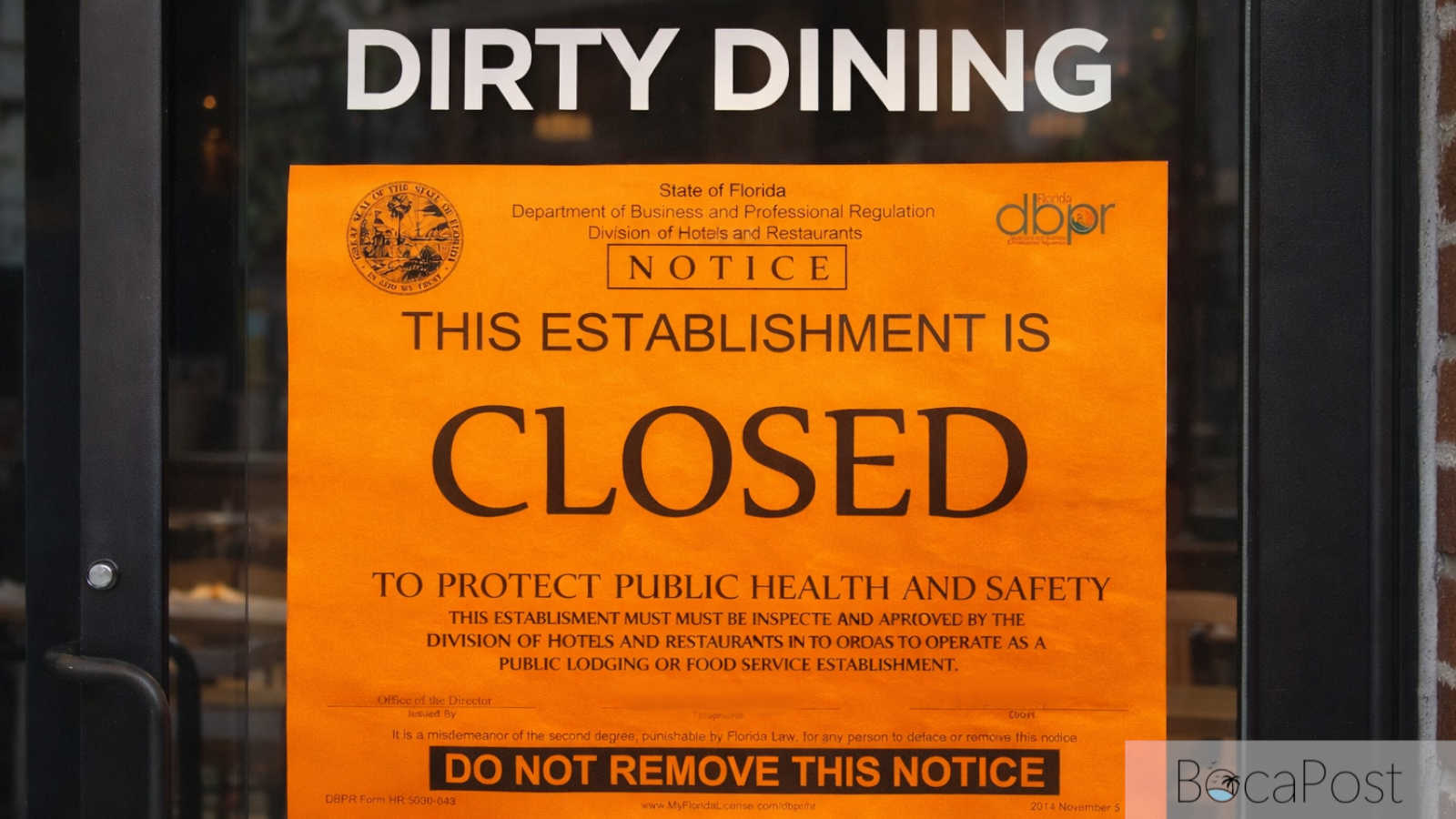
Boca Raton Restaurants Among 5 Emergency Closures This Week
Five restaurants in Palm Beach and Broward were temporarily shut down during the week ending Feb. 22, as inspectors also documented multiple high-priority food safety violations across the region.
-
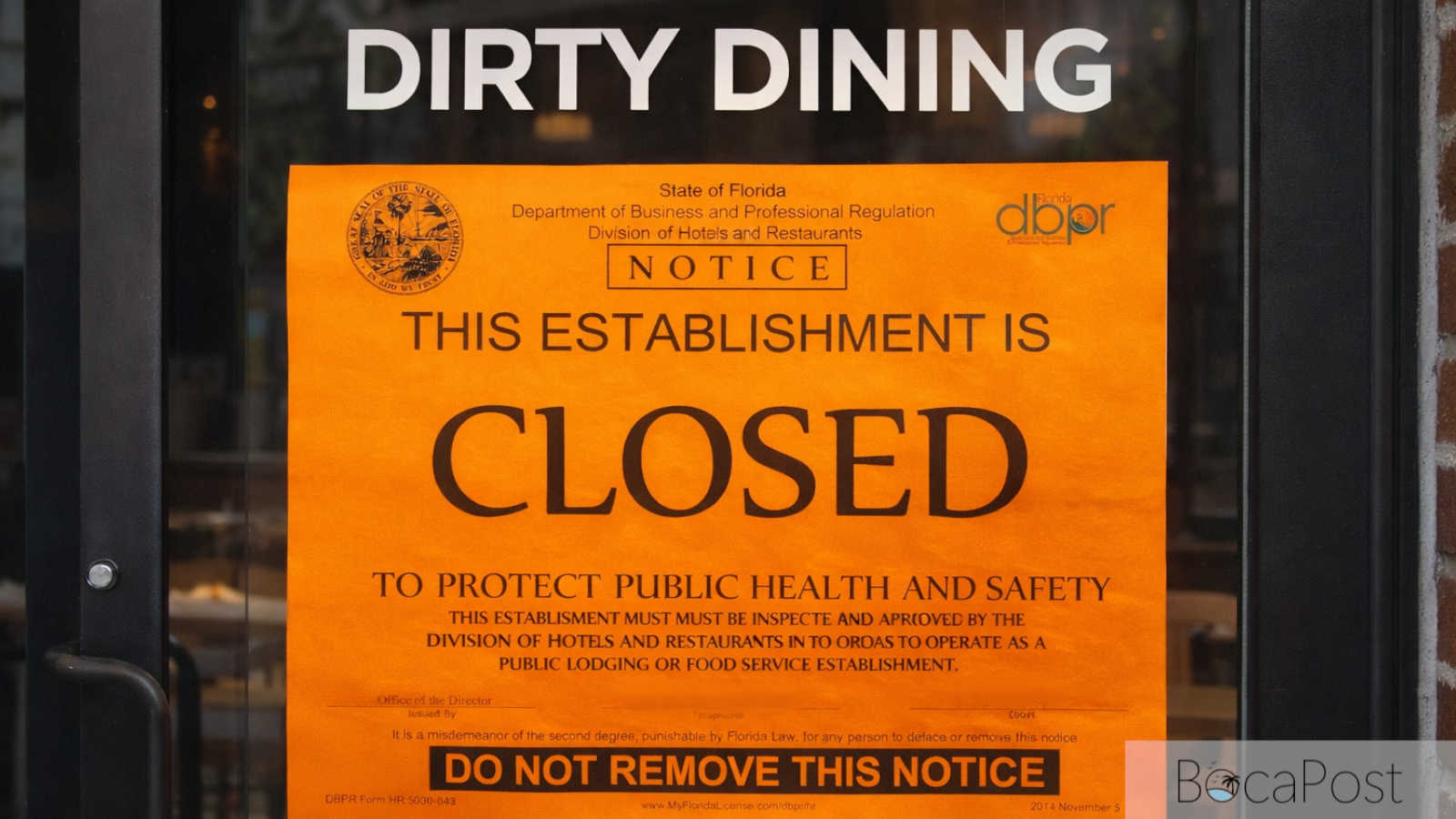
Dirty Dining: 7 Restaurants Ordered Closed in Palm Beach and Broward
State records show seven Palm Beach and Broward food service establishments were ordered to shut down during the week ending Feb. 15, 2026, while hundreds of inspections across both counties flagged additional high-priority violations.
-

Dirty Dining: Roaches, Temperature Issues And Emergency Closures In This Week’s Report
State records show three emergency closures in Broward and hundreds of inspections across Palm Beach and Broward, with several local restaurants cited for high-priority violations during the week ending Feb. 8.
More Health Inspection Reports
Restaurant inspection reports are conducted by state regulators and may include violations related to sanitation, food storage, temperature control, and pest activity. A temporary closure reflects conditions at the time of inspection and does not necessarily indicate ongoing violations. Establishments may reopen after corrective action is taken.
-

Dirty Dining: State Inspections Cite Temperature, Sanitation Issues Across Boca, Delray, Broward
No emergency closures in Palm Beach or Broward for the week ending Jan. 18, but multiple inspections in Boca Raton, Delray Beach, and several Broward cities cited high-priority violations tied to food temperatures, sanitation, and pests.
-
Dirty Dining: 3 Emergency Closures, Boca Raton Inspections Flag High-Risk Violations
State records show three emergency closures in Palm Beach and Broward during the week ending Jan. 11, with follow-up inspections tied to water, sewage, and pest concerns.
-

Dirty Dining – 3 Emergency Closures, Dozens of High-Priority Violations
BOCA RATON, FL (Boca Post) (Copyright © 2026) — Dirty Dining is based on state inspection records, and this week’s files show three emergency closures in Palm Beach and Broward, all tied to roach activity, along with a heavy run of inspections that turned up high-priority food safety problems across the area. Some of it
-

Dirty Dining: One Emergency Closure In Delray Beach, Dozens Of Inspections Across Palm Beach And Broward
State records show one emergency closure locally and 90+ inspections across Palm Beach and Broward during the week ending Dec. 28, with pest activity, temperature control issues, and hot-water problems among the repeat themes.
About Dirty Dining
Our Dirty Dining coverage is based on published inspection reports, emergency closure orders, and disciplinary records released by state regulators.
Articles may include details about violations, closure reasons, follow-up inspections, and whether an establishment was later cleared to reopen. Reports are tied to official inspection data, not anonymous tips or reviews.
Inclusion in Dirty Dining coverage reflects inspection findings at a specific point in time and does not represent a permanent judgment about a business.
How Boca Post Covers Dirty Dining
Boca Post reports Dirty Dining stories using official inspection and enforcement records from state regulatory agencies. We summarize what inspectors documented, when inspections occurred, and what actions were ordered.
Coverage sticks to documented findings and avoids speculation, exaggeration, or editorial commentary. When follow-up inspections show compliance or reopening, that information is included when available.
Our goal is to present clear, factual inspection results so readers can understand what regulators found and what actions were taken.
Dirty Dining is Boca Post’s ongoing public-service reporting on restaurant inspections conducted by the Florida Division of Hotels and Restaurants. The reports published here are based entirely on state inspection records and are intended to provide transparency into food safety enforcement — not to assign grades or make legal judgments about individual businesses.
An emergency closure is not a disciplinary action. It is a temporary measure taken when inspectors find conditions that pose an elevated risk to public health, safety, or employee welfare. A restaurant ordered closed must remain closed until the cited conditions are corrected and approved by inspectors. Common conditions that can result in an emergency closure include a lack of hot water or approved utilities, sewage backups or overflows, fire damage, pest infestations, or inadequate refrigeration. In Florida, inspections leading to emergency closures are conducted by Sanitation and Safety Inspectors with the Division of Hotels and Restaurants. Emergency closure reports are released statewide on a weekly basis.
Inspection reports reflect conditions observed at the time of inspection. Each report is a snapshot of what inspectors found on that specific day and may not represent an establishment’s long-term compliance history. On any given day, a restaurant may have more or fewer violations than those listed in its most recent inspection. Many issues are corrected during or shortly after an inspection, and follow-up inspections may reflect those changes.
Inspection reports and disciplinary actions are separate processes. Inspections document observed conditions, while disciplinary activity reports may involve fines or formal actions issued through a final order. Not every inspection results in disciplinary action, and not every disciplinary action involves an emergency closure. Boca Post reports inspection and disciplinary records as they are released by the state to provide accurate, timely public information.
Florida food service inspections use a standardized violation code system aligned with the FDA Food Code. Violations are grouped by category and severity to ensure consistent reporting across thousands of inspections conducted statewide. The violation numbers referenced in inspection reports correspond to specific provisions of the Florida food code and allow inspectors to document findings uniformly.
High-risk violations typically involve conditions that can directly contribute to foodborne illness or contamination. These may include improper hot or cold food holding temperatures, cross-contamination, bare-hand contact with ready-to-eat foods, employee illness, pest activity, unsafe water supply, or sewage issues. When high-risk violations are not corrected, they are more likely to result in emergency closures.
Good Retail Practice violations generally involve maintenance, storage, or procedural issues that do not pose an immediate health risk but are still required to be corrected. Examples include improper utensil storage, minor sanitation concerns, or facility maintenance issues.
Boca Post’s Dirty Dining reports typically cover restaurant inspections across Palm Beach County and Broward County, including multiple cities and neighborhoods in each weekly release. Coverage is based on the inspection data made available by the state during that reporting period and may include establishments in Boca Raton, Delray Beach, Boynton Beach, Fort Lauderdale, Hollywood, and surrounding communities.
Florida Restaurants Temporarily Closed Due to Severe Health Code Violations
Each week, Boca Post tracks Florida restaurants temporarily closed due to severe health code violations following official state inspections.
Temporary closures are typically issued when inspectors identify conditions that present an immediate threat to public health. Under Florida regulations, restaurants may be ordered to stop operations until violations are corrected and a follow-up inspection confirms compliance.
Common reasons restaurants are temporarily closed in Florida include:
- Live rodent or roach activity in food preparation areas
- Sewage backup or wastewater contamination
- Lack of running hot water
- Unsafe food temperatures
- Cross-contamination of raw and ready-to-eat foods
- Repeated high-priority violations during inspection
When inspectors determine conditions warrant immediate enforcement, an Emergency Order or Administrative Complaint may be issued. The restaurant must correct the violations before reopening.
Most closures are temporary. After corrections are made, the establishment can request re-inspection. If the restaurant passes, it may resume operations.
Boca Post’s Dirty Dining coverage documents:
- The restaurant name and city
- Inspection date
- Whether a temporary closure was ordered
- The number and severity of violations
- Re-inspection outcomes when available
All information is based on official Florida inspection and enforcement records.
Note from the editor:
Inspection and closure information published by Boca Post is sourced from official records released by the Florida Department of Business and Professional Regulation. Conditions cited in inspection reports may change after the inspection date, and many establishments correct violations promptly.