
BOCA RATON, FL (Boca Post) (Copyright © 2026) — City leaders are moving a four-part ordinance that would commit a large chunk of City-owned downtown land to a long-term public-private redevelopment framework, centered on a 99-year leasehold conveyance and a master plan tying together civic buildings, private mixed-use development, structured parking, and public-facing spaces.
Ordinance No. 5769 was introduced at Tuesday's Boca Raton City Council meeting. The ordinance is designed as a single transaction split into Parts I through IV. Taken together, it authorizes the conveyance of a 99-year leasehold interest in roughly 7.8 acres of City-owned property to Boca Raton City Center, LLC (Terra/Frisbie), approves the Master Partnership Agreement that governs the redevelopment, and adopts additional agreements that assign project management duties and set financial terms.
The City’s pitch, as described in the materials, is straightforward: modernize an aging downtown campus, replace and upgrade public facilities, and shift major development and market risk to a private partner while keeping underlying land ownership with the City. The structure leans heavily on long-term planning and phased approvals. It is built to survive election cycles.
But the fine print matters. A lot of it.
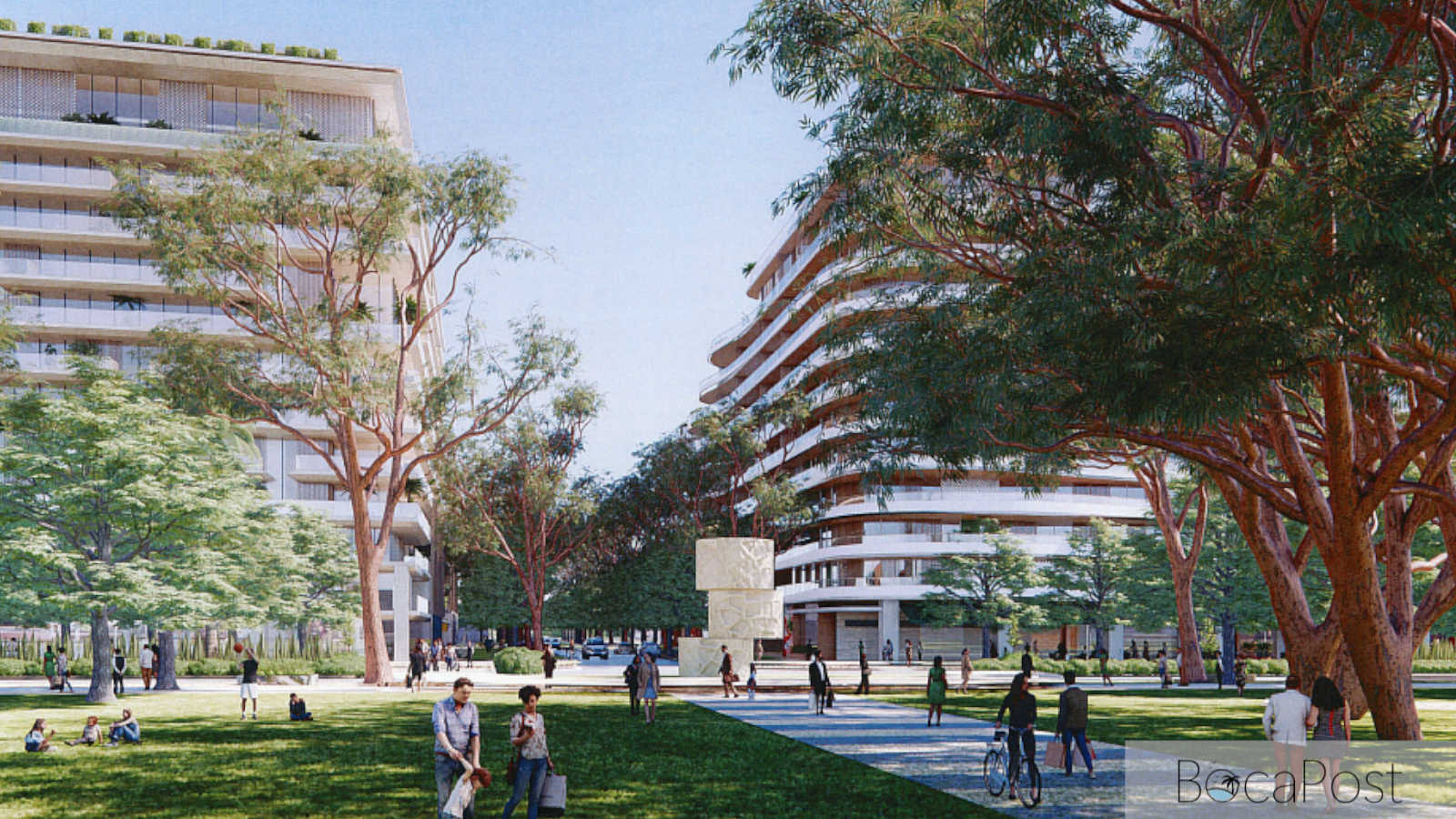
The documents outline public-facing areas and park-adjacent obligations, along with a promenade and sidewalk responsibility map. The financial structure is more technical. It includes “gross revenue hurdles” and participation rent calculations that only kick in after revenues exceed defined thresholds, with office and retail treated separately and hurdles adjusted over time.
That means the upside people talk about — the City sharing in strong project performance — is not a guaranteed early payout. It arrives later, if at all, depending on how the project performs and how the accounting works year to year.
Below is a citizen-grade explainer of what this package does, where it places risk, and what elected officials should be answering in public before anything gets locked in for the long haul.
What is in Ordinance 5769?
- What’s being approved: A 99-year leasehold conveyance of City-owned downtown land and a multi-agreement framework governing redevelopment, construction management, and revenue.
- What residents get on paper: A master-planned downtown campus concept, new or rebuilt public facilities, public-facing areas, and defined maintenance responsibilities in specific mapped locations.
- What the City gives up: Practical control of prime public land for nearly a century, with future councils largely bound to the deal structure and milestones already agreed to.
- How the money works: The City may receive base rent, plus additional rent tied to percentage and participation formulas. Participation rent depends on revenues clearing “gross revenue hurdles.”
- What’s hardest to track: The deal is exhibit-driven and accounting-heavy. Oversight depends on audits, reporting, and enforcement over decades.
Questions remain
- What is the minimum guaranteed annual revenue to the City regardless of project performance?
- What is the City’s realistic expectation for when participation rent becomes meaningful?
- Who audits revenues and expense assumptions, how often, and what records must be produced?
- If revenues don’t exceed the hurdles for long periods, what does the City actually receive financially over time?
- What are the City’s exit ramps if the project stalls, timelines slip, or assumptions fail?
- What public amenities are required, by when, and what happens if they are delayed or scaled back?
- How will compliance be enforced 20, 40, or 60 years from now and who pays for that oversight?
Timeline: when the City realistically sees revenue
- Before construction / during approvals: No participation rent. The City is in planning and entitlement mode, with the framework governing future development and public facilities.
- Construction and delivery period: City payments are tied to the deal’s stated rent and project terms, but the “upside” remains on the other side of completion and operations.
- First operating years after opening: Participation rent is only possible if gross revenues exceed the defined hurdles for each component. One component can pay while another pays nothing in the same year.
- Stabilized, later years: If the project performs strongly and consistently, participation rent may grow. If performance is average, flat, or uneven, the City’s upside can remain limited.
In all, the ordinance is not a simple lease. It is a generational commitment built around a master plan and multiple agreements that trade immediate control for a long-run redevelopment bet. Residents should not assume the City’s biggest financial benefit shows up quickly, because the structure does not read that way.
What happens next:
While City Council can vote to approve the redevelopment agreements tied to Ordinance 5769, the project’s implementation is subject to a March 10 citywide referendum. Voters will be asked whether to approve the long-term lease and redevelopment framework for the downtown government campus. If voters reject the measure, the agreements would not move forward as written, and the City would need to revisit its plans for the site.
Source: Ordinance No. 5769 draft package, Parts I–IV (available on the city's website)
After months of public meetings and council votes, key Boca Raton development decisions are headed to voters. The March 10 municipal election will determine leadership at City Hall and the fate of two major citywide proposals.