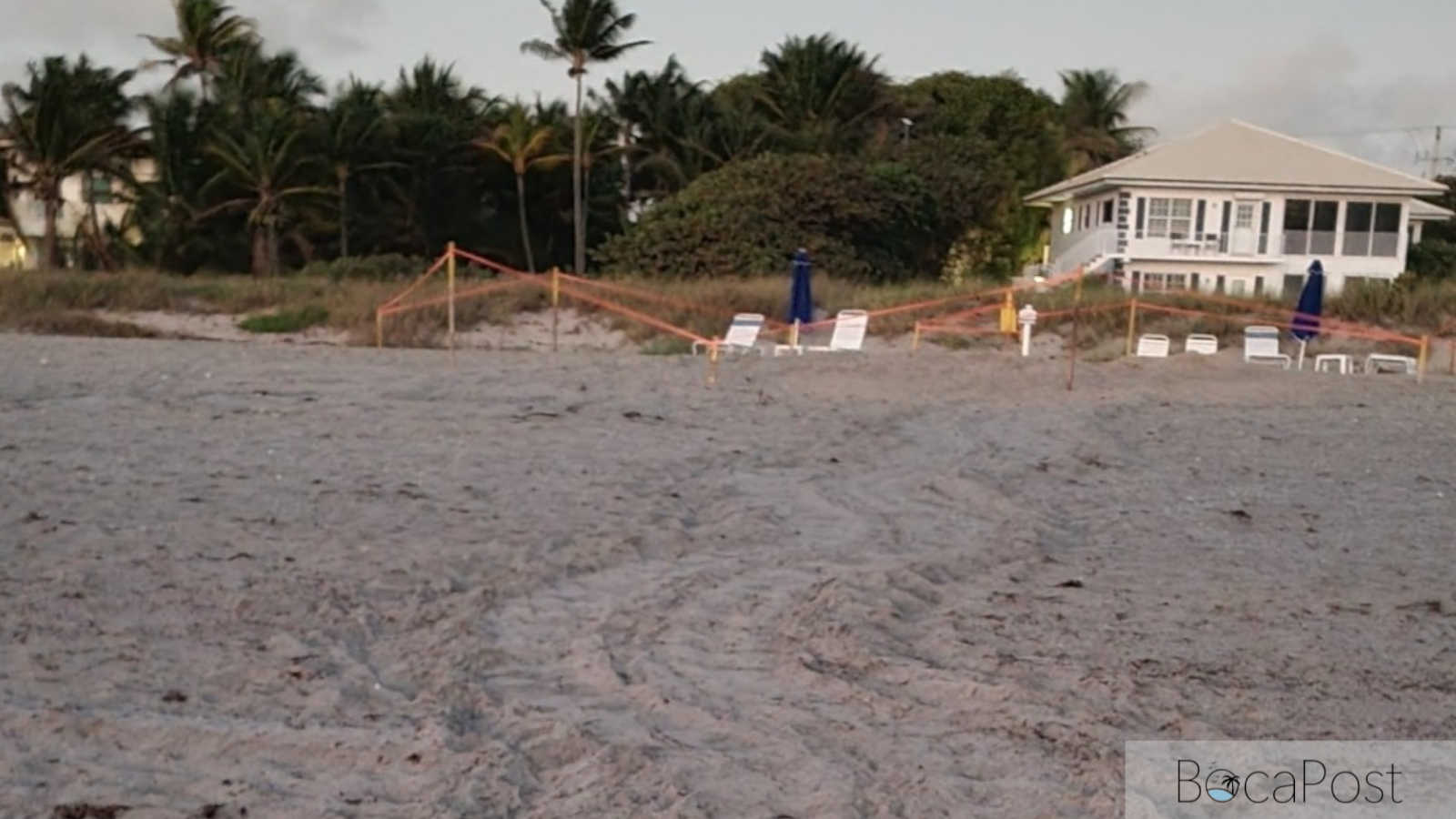
DELRAY BEACH, FL — The first sea turtle nest of the 2026 season has been recorded on Delray Beach’s shoreline, signaling the start of the annual nesting season that runs along Palm Beach County’s Atlantic coast through the fall.
City officials confirmed the nest belongs to a leatherback sea turtle, the largest and one of the most endangered sea turtle species in the world. Leatherbacks are typically the earliest turtles to arrive each year, and their nests often mark the beginning of South Florida’s sea turtle nesting season, which runs from March 1 through October 31.
The City of Delray Beach announced the discovery this week, noting the early arrival of the massive marine reptiles that return annually to Florida’s beaches to lay eggs.
Sea turtle nesting is a significant seasonal event across Palm Beach County and much of South Florida. Several species—including leatherbacks, loggerheads, and green sea turtles—use the region’s beaches as critical nesting habitat each year. Leatherbacks are usually the first to appear, often beginning their nesting activity weeks before other species arrive.
Leatherbacks can weigh up to 2,000 pounds and grow more than six feet long. Unlike other sea turtles, their shells are not hard but instead covered with thick, rubbery skin. The species is listed as endangered worldwide due to threats including habitat loss, fishing gear entanglement, marine pollution, and coastal development.
During nesting season, female sea turtles emerge from the ocean at night to dig nests in the sand and lay clutches of eggs before returning to the water. Hatchlings later emerge weeks later, typically at night, and make their way toward the ocean.
Because nesting and hatching activity occurs primarily after dark, artificial lighting along the coast can disrupt the process. Bright lights visible from the beach can disorient both nesting turtles and newly hatched turtles, causing them to move inland rather than toward the ocean.
City officials are reminding residents and visitors that small actions on the beach can significantly affect nesting success.
Lights visible from the shoreline should be turned off or shielded whenever possible during nesting season. Curtains should be closed in beachfront homes and buildings at night, and visitors are encouraged to avoid using flashlights or cell phone lights near nesting turtles or hatchlings.
Beachgoers are also asked to keep their distance from nesting turtles and hatchlings if encountered. Approaching turtles, making noise, or attempting to touch them can cause nesting females to abandon the process or disrupt hatchlings trying to reach the water.
Beach conditions can also affect nesting turtles. Holes dug in the sand, beach furniture left overnight, and other obstacles can block turtles attempting to reach suitable nesting areas or prevent hatchlings from safely reaching the ocean.
Local coastal management programs throughout Palm Beach County routinely monitor nesting activity along area beaches and mark nests to protect them from disturbance. The monitoring programs also collect data on nesting numbers, hatch rates, and species distribution.
Sea turtle nesting activity typically increases through late spring and summer as additional species begin arriving on South Florida beaches. Loggerhead turtles generally account for the majority of nests in the region, while leatherback and green sea turtles appear in smaller numbers.
The arrival of the first leatherback nest marks the beginning of what local officials hope will be another successful season for sea turtle conservation along Delray Beach’s coastline.
Residents and visitors spending time along the beach during nesting season are encouraged to remain aware of marked nesting areas and follow posted guidance to help protect turtles and their habitat.
Sea turtle nests will continue to appear along Palm Beach County beaches throughout the spring and summer months, with hatchling activity typically beginning later in the season.